Showing posts with label writing advice. Show all posts

Wednesday, December 5, 2012

#IWSG I Joined the Insecure Writers Support Group

My first thought upon finding this was, There's a support group? And then I thought, Finally!

Writers are a peculiar breed. (I've always been peculiar, but now that I've figured out I'm a writer, I have a reason for it.) Writing is, after all, a lonely profession. It's just you and the keyboard, and that little voice inside you.

Some days, that voice is kind and encouraging. Other days ... Well ...

I talk with other writers frequently and I've discovered that a lot of us suffer from the same  issues that stem from insecurity.

We're our own harshest critics. Half-way through the manuscript for Ghostwriter, I wanted to scrap it. I can remember sitting there at the keyboard, chastising myself:"This sucks. No one i ever going to want to read this crap. What made you think you could write a book, anyway?"

One of my fanfiction stories has six thousand reviews. Five of them were mean. Guess which ones I have memorized? My friends and family have praised my writing, but that little voice says to me they're just "being nice." And so were those 5,595 reviewers.

This is why it's helpful to put your writing aside for a while and then go back and read it like a stranger would, not looking for flaws, but just enjoying the story. I've gone back to some of my stories and said, "Hey, this isn't bad!" That's a good feeling. I've also gone back and said, "Oh, lord, what was I thinking?" but this is good, too. It shows how far I've come, how much I've learned.

And there's another aspect of being your own harshest critic that's positive: it makes you want to work harder to improve. The key is giving yourself credit when you do.

Writing is part of our souls. Even if our work is fictional, there's tiny bits of ourselves stirred within. I don't think a writer can help it. We get our inspiration from life experiences and that makes it personal in a way that's difficult for a non-writer to understand. Though I don't do it personally, many people write as a form of therapy, exorcising their demons with paper and ink. Whatever the reason, it sometimes feels like cracking open your head and inviting people to root around in your brain.

It ties in with the fear of failure. Because if our writing is from the heart and people think it's terrible, they think we're terrible. That's why it's often so difficult to take that first step in sharing what we've written.

But we have to find that courage. That's what art is all about, after all. It's human emotion and thought translated into a visual or audio medium. It's that personal aspect which makes it art instead of just a consumer product. And like all art, your words will not speak to everyone.  Accepting that sounds so simple, but it can be very difficult.


Wednesday, July 11, 2012

So, You're Stuck: Part II

Today's post is dedicated to the memory of  Gisela Gagliardi, who died yesterday after a tragic accident outside of Comic Con. I never met Gisela, but my heart goes out to her family and friends. A fundraiser has been established to assist her family with her final expenses.

______________________________________________________________________________


The last time I wrote on this topic, I gave some tips for getting the creative juices flowing when you feel like you've hit a brick wall. Writer's block is a very common affliction, but it doesn't have to be a roadblock. Think of it as a rest-stop, a chance to refresh your batteries and approach your work from a new angle.

One of the first ways to do this is to consider your goal for the particular story/chapter/paper. Do you want to convince your reader of something? Do you want to create a certain mood or to stir a certain emotion in your reader? Scare them, make them laugh, make them cry? The words you choose will greatly affect the outcome. Social scientists have long noted that the way a poll or article is worded has a heavy influence on the responses it will get.The reader may be completely unaware that the word choice is "nudging" them toward a certain conclusion.

 In a second study when positive and negative statements were combined (“… removing homes and extended roads”) 40% of people thought he would be re-elected. When the tense was switched (“…removed homes and extending roads”) 56% of people thought the politician would be re-elected.

Make a list of the words that you associate with the emotion you want to draw from your reader. Do an internet search for websites that deal with the topic. Read some of the stories and copy down phrases which you think captured the mood or stirred emotion. Now, think about how your characters would employ those words to describe their situation.


One of the things that once gave me a bit of inspiration happened when I was researching a word. I looked up the etymology and discovered its first recorded usage. Looking up that particular piece of text led me to an amusing anecdote that inspired a moment in the piece I was writing.

I never imagined I would find an "etymology" cartoon. God, I love the internet!

 Another idea is to write a "fanfic" of your own story. Write a few paragraphs from another character's perspective. Sometimes, we get "stuck" in the mind of our main character and that can limit your perception of the whole story.

Try a different narrative style. Have you been writing sequentially? Skip ahead and write the scene that's giving you trouble as a flashback. Have one of the characters call a friend and describe what happened in dialogue. Write it in a different tense.


One writer I once discussed this subject with said that she was "unblocked" when she decided she wasn't going to be able to complete her story, so she wrote out a summary of how it was going to end, intending to post it for the story's fans, so they'd at least be able to have some kind of resolution. As she was writing it, it got longer and longer as she added more detail, and before she knew it, she was writing the rest of the story as she'd hoped.

Simply talking it out with a friend can also help you. Call up a friend who can listen to your ideas and offer suggestions, or even just chat with a stranger over the internet. One writer online suggests talking to your dog or cat about it. (I swear I'm not making this up.)


Maybe you'd be better off talking to a dog. Cats aren't famed for being good listeners.


Maybe you need to take the story in a new direction. Supposedly, Mark Twain was stuck when he was writing Huckleberry Finn when he suddenly had the idea that Huck and Jim would take the wrong fork in the river and get lost. Maybe having your own characters get "lost" in something and fighting their way back will help you get back on track, as well.

Lastly, Google Images is your friend. Got a word or phrase that conveys what you want to say? Type it in as a search term. Browse through the image results. If you find one that grabs you, make another list of words that describes it. Use that image and the words as the basis for a paragraph of text. You may just find yourself expanding on it bit by bit.

Tuesday, July 3, 2012

Edit Ruthlessly!


In my first draft of Ghostwriter, I had a long scene about the anarchist bombings of 1919. I had to cut it and I was reluctant to do so. I told myself that it was important to establish the setting, necessary for the reader to understand the time period.

But, in the end, I had to admit it needed to go. There was no real reason for the scene. It didn't establish any necessary details about the story, reveal anything important about the characters, nor did it move the plot forward.


"But it's a great scene! One of my characters meets a historical figure most people have never heard of!"


Those who have read my story The Selkie Wife know how I love to indulge in historical detail. I'm a nerd. I like that sort of stuff. I once saw a post on a FF board which asked if The Selkie Wife had ever stopped being a history lesson and gone back to being a fanfiction story. They had a point.

But fanfiction is for fun. I could indulge my nerdy side a bit. A book is something entirely different. Authors who become self-indulgent drag down their own work. In the end, I found I could reduce the scene down to a single line and still convey what I needed for the story.

That's not to say it's easy. Writing is an intensely personal process for many authors and they have an emotional investment in their work. Being told that part of it doesn't work can actually hurt. It's like being told your child is ugly.

Stephen King once said that the best advice he ever got on editing was this:

In the spring of my senior year at Lisbon High—1966, this would’ve been-I got a scribbled comment that changed the way I rewrote my fiction once and forever.  Jotted below the machine-generated signature of the editor was this mot:  ‘Not bad, but PUFFY.  You need to revise for length.  Formula: 2nd Draft = 1st Draft – 10%.  Good luck.”

I wish I could remember who wrote that note . . . .  Whoever it was did me a hell of a favor.  I copied the formula out on a piece of shirt-cardboard and taped it to the wall beside my typewriter.  Good things started to happen for me shortly after.”


Another of his quotes that I find particularly pertinent:
In many cases when a reader puts a story aside because it 'got boring,' the boredom arose because the writer grew enchanted with his powers of description and lost sight of his priority, which is to keep the ball rolling.


Saturday, June 30, 2012

So, You're Stuck ...

The blank screen can be intimidating. Some call it "writer's block", a term I've never particularly liked.


I'm facing elements of it myself right now as I'm working on my third novel. This is the first one that I haven't already "pre-written" in my head, and so I'm experiencing new challenges as a writer. I have a general idea of where I'm going with the story and the struggles my characters will face, but it's not laid out nice and smoothly like my other stories.


The first issue I encountered was that I wanted to write everything sequentially, like I ordinarily do. I may have known the next major scene, but I wasn't sure how to build the connection from the place where I was.


For days, I pecked at the keyboard, getting frustrated and deciding that I needed to take another "Facebook break."


I realized about two days ago what a mistake it was (the sequential part, not the Facebook part, though  wasting time on Facebook is questionable, too). I finally tossed up my hands and said, "I'll write the scene I want to write!" Once I gave myself "permission" to move on and work on something else, the words flowed smoothly again.

I also wanted everything to be perfectly written. I'd find myself going back over the same sentence, searching for the exactly perfect adjective which would convey the exact shade of meaning. I'd always heard, "Don't edit as you write," but I'd never understood what it meant. I finally let myself just write, get the story out onto the screen, and then go back at the end of the evening and do the edits I thought it needed.


Allow yourself to meander. You never know when that paragraph that you're sure you're going to delete later might be the seed of a good idea. Even if you end up taking it out, you may be able to use a scrap of text in another place or build off of an idea it contains. I have a "bits and pieces" file where I put paragraphs that I might want to save for later.

If all else fails, you may want to jump over to work on another project for a while. It can give you a much needed "brain reboot."


Find things which inspire you. Believe it or not, I've discovered I write romance best when I'm listening to White Zombie, Nine Inch Nails and Rammstein. Don't ask me to explain it. When I switched my Pandora station to my usual preference, 90's Alternative, my productivity plummeted.

You never know where you'll find inspiration.


Reading is always a good place to start because you can study the way other writers have dealt with the situation you're facing. Watching television, playing games, anything creative can give you ideas that might help you find your stride again. 

Sunday, June 24, 2012

The Part No One Likes: Dealing with Criticism

You've done it. You've finished your story/article/book, the product of hours of hard work, a labor of love into which you've poured your heart and soul. You've gathered up your courage and posted/published it.

And then this happens...


You're crushed.


You may be angry or defensive.


You're upset, to say the least.


And all of those feelings are okay. They're a natural reaction to being hurt.

You need a hug.

 Maybe two.


Don't be ashamed of feeling hurt. It's only natural. But you can channel it into something constructive. Find a story you like and write a review that says all the kind things you wish the reviewer would have said to you.You can't help how you feel, but you are the one who decides how you'll react to it.

Once you've dealt with your emotional reaction, it's time to think about what the criticism means for you as a writer.

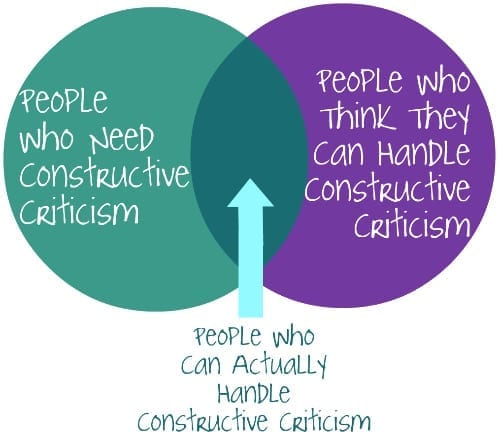
The first thing to determine is whether the criticism was constructive or not. Even if harshly worded, criticism may contain valuable information which will make you a better writer. Is there anything that you can take from the comment that you can use as a basis for improvement? Did they point out a plot hole you need to address? An action which seems out-of-character for one of your protagonists that may need more explanation? Grammar or spelling issues? All of these things can be fixed, but we need to be aware of them in order to do so.

All writers have room for improvement. None of us ever truly master the craft. It's a life-long journey, and if we're lucky and diligent, we'll get better as we grow and learn. In that respect, we all need criticism because it's very difficult to spot your own flaws, though you may be able to spot them in another person's work almost instantly. (Ever try to edit your own writing? It's very difficult, because your eyes "see" the story as it exists in your mind, not necessarily the words on the screen.)

I'm sort of working on that, myself.
Not all criticism is constructive, nor intended to be. Sometimes, people just want to be cruel. You're going to encounter it at some point. The important thing is to realize that you are not alone. No writer, no matter how gifted or famous, has ever escaped criticism. Ralph Waldo Emerson once said of Jane Austen: “Miss Austen’s novels … seem to me vulgar in tone, sterile in artistic invention, imprisoned in the wretched conventions of English society, without genius, wit, or knowledge of the world. Never was life so pinched and narrow. The one problem in the mind of the writer … is marriageableness.” Ouch!

Readers often have an emotional investment in a story. In that respect, angry comments can be interpreted as a sort of compliment because it means you have managed to touch the reader on an emotional level. Fanfiction authors have an unusual burden in this area, because they are already dealing with familiar characters that might have their own emotional baggage, such as readers being "prepared" to hate Tanya or Jacob in Twilight fanfiction, so some of their reaction may be brought with them from earlier works that they've read.

So, what do you do when you get a scathing review or mean comment? As I wrote earlier, the important thing is how we choose to react to criticism, both constructive and non-constructive. If you must respond, be polite. Don't fire back, or try to argue with the critic. It's futile and it only makes you look bad.

Also, the person may not realize how their comment came across to you. The written format is limiting in one respect: we do not have the benefit of facial expressions and body language which might "soften" a comment if it were given face-to-face. The person may not be a writer, after all, and may not be familiar with the power of words or the unintentional implications of them. They could be having a bad day and might later regret those words. There could be a lot of reasons that have nothing to do with you or your story.

Having been a recipient of criticism, it has made me more cautious when dispensing it. That doesn't mean you have to be nothing-but-positive when reviewing a story, but always keep in mind that there's a person just like you on the other end who may be hurt by your words. So choose wisely.

Many people suggest using the "sandwich" technique when dispensing criticism. Praise what you liked about the story, then make suggestion which might help the author improve, and end on a complimentary note.

After all ...


Wednesday, June 20, 2012

The Best Advice: "Keep Writing!"

SpunkyBookworm left a lovely comment on my last article: "Thank you for your words. You are inspiring me to keep at my writing."

Reading that warmed my heart, because I firmly believe that the best advice any writer can get -- and give -- is to keep writing.


Writing is a journey, not a destination.I guarantee that the first time Mozart sat down at a piano, he didn't write a symphony. It's a life-long learning process, and if we're diligent at it and learn from our mistakes, we improve with practice. That's why fanfiction is such a wonderful place for new writers to work on their skills. You have an intimate connection with your audience and they don't hesitate to tell you where you've gone wrong. It stings, but criticism is valuable if there's something you can take from it that helps you to improve.

Experiment. During my time with the fandom, I have expanded and tried different styles of writing. I prefer writing in third-person, past tense but I tried writing a story in first-person, present tense, just to see how it would work for me. It's not a style I'd enjoy working in for a full-length fic or novel, but I learned some things from the experience. (I wrote a couple of articles about the experience, and how short story writing differs from full-length story writing.)
 
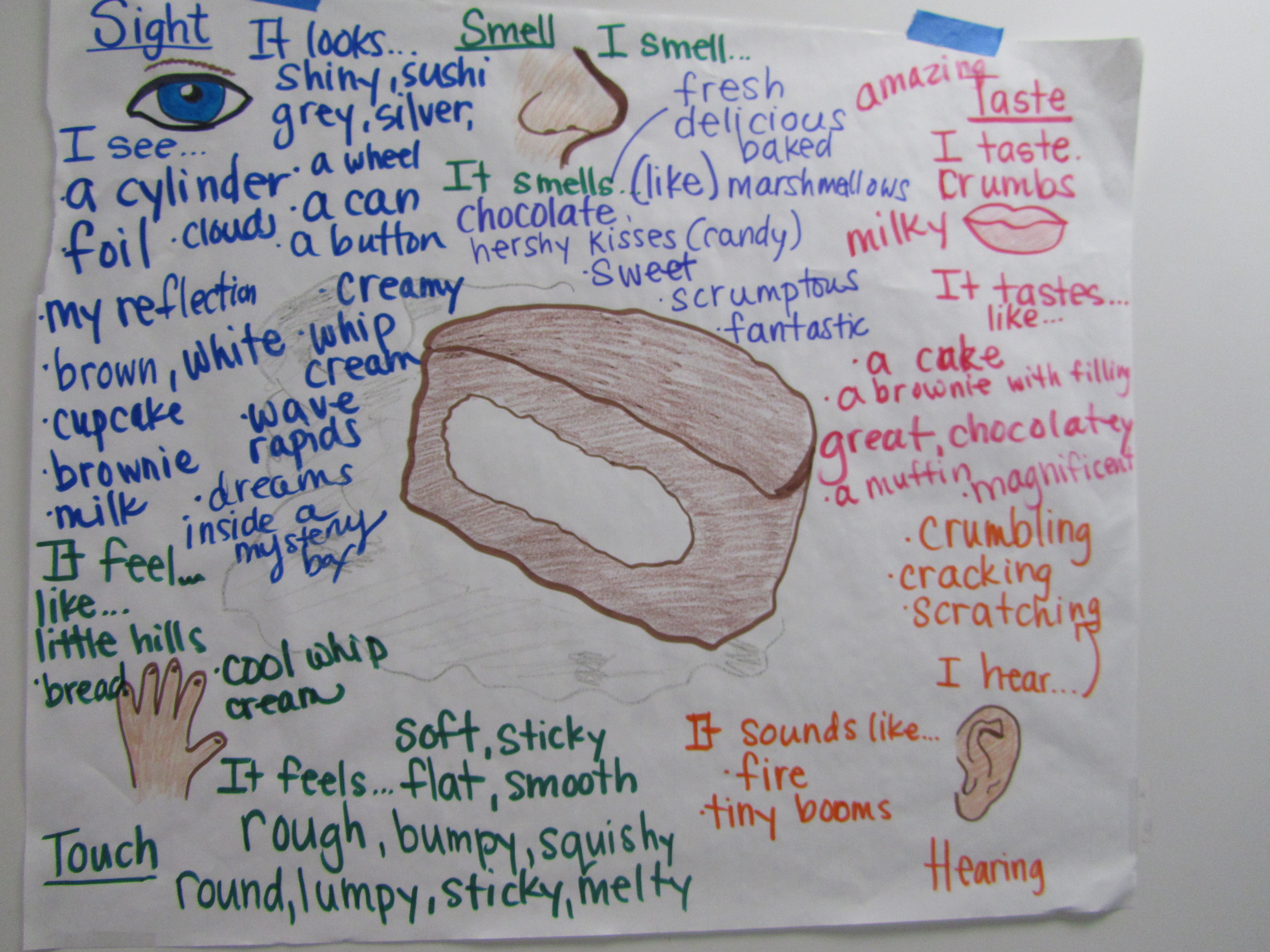
Someone once told me that the way they used to audition hosts for the Home Shopping Channel was to plunk a can of Coca-Cola on the table in front of the applicant and ask them to "sell" it for five minutes. I don't know if it's true, but I could see how it would be an extremely valuable exercise. Try the same thing as a writer: describe something mundane. Use all of your senses. Think of adjectives and synonyms for them. How does it make you feel? What are your memories of this item?


Challenge yourself. I'm a romance writer, but I wanted to get the experience of working in other genres. The experience of trying a new genre or story type will teach you about how to better craft a tale in your chosen style. As an example, short story writing taught me more about "info dumps" in a story and how to weave information in and out of other parts of the story.

Try some story prompts. Enter some contests. Try to write a story in exactly 100 words.  Try the NaNoWriMo challenge and write an entire novel in a month. It doesn't have to be good. No one is grading you, except yourself, and the goal is to learn, not to impress.

And never stop learning. Raum once asked me for an article what I had learned from bad writers and I thought it was an excellent question. What I learned from them was that I'll never be "good enough", at least, I hope I won't ever think that I am.

Some authors, after a measure of success, seem to go downhill. There's one author in particular -- who shall remain nameless -- that I think personifies this issue.

The author (I'll call them 'Pat', a nice, genderless name) who has a long series of novels which became very popular. But after a number of books in the series, Pat got away from what had made the series so loved by fans. The quality of the books themselves began to decline as the page count simultaneously increased. (Repetitive dialogue, unnecessary scenes ... Even improper punctuation.)
 
Sales of the series declined and fans began making some pretty harsh comments about the books. Pat responded to criticism from fans by getting angry and defensive, and made hostile comments online, which drove away some readers.
 
Pat forgot that writing  is a symbiotic relationship.  Artistic integrity is one thing, but refusing to listen to legitimate criticism is quite another. Pat also forgot that editors are necessary. We may like to believe that every word that pours from our keyboard is pure gold, but we sometimes need someone to ask us why a scene is in the novel and insist on proper grammar.

And now ...


Monday, June 18, 2012

Repost: Why you should never, ever use two spaces after a period.

Space Invaders

Why you should never, ever use two spaces after a period.

Extra space.
Can I let you in on a secret? Typing two spaces after a period is totally, completely, utterly, and inarguably wrong.
And yet people who use two spaces are everywhere, their ugly error crossing every social boundary of class, education, and taste. *  You'd expect, for instance, that anyone savvy enough to read Slate would know the proper rules of typing, but you'd be wrong; every third e-mail I get from readers includes the two-space error. (In editing letters for "Dear Farhad," my occasional tech-advice column, I've removed enough extra spaces to fill my forthcoming volume of melancholy epic poetry, The Emptiness Within.) The public relations profession is similarly ignorant; I've received press releases and correspondence from the biggest companies in the world that are riddled with extra spaces. Some of my best friends are irredeemable two spacers, too, and even my wife has been known to use an unnecessary extra space every now and then (though she points out that she does so only when writing to other two-spacers, just to make them happy).

What galls me about two-spacers isn't just their numbers. It's their certainty that they're right. Over Thanksgiving dinner last year, I asked people what they considered to be the "correct" number of spaces between sentences. The diners included doctors, computer programmers, and other highly accomplished professionals. Everyone—everyone!—said it was proper to use two spaces. Some people admitted to slipping sometimes and using a single space—but when writing something formal, they were always careful to use two. Others explained they mostly used a single space but felt guilty for violating the two-space "rule." Still others said they used two spaces all the time, and they were thrilled to be so proper. When I pointed out that they were doing it wrong—that, in fact, the correct way to end a sentence is with a period followed by a single, proud, beautiful space—the table balked. "Who says two spaces is wrong?" they wanted to know.

Typographers, that's who. The people who study and design the typewritten word decided long ago that we should use one space, not two, between sentences. That convention was not arrived at casually. James Felici, author of the The Complete Manual of Typography, points out that the early history of type is one of inconsistent spacing. Hundreds of years ago some typesetters would end sentences with a double space, others would use a single space, and a few renegades would use three or four spaces. Inconsistency reigned in all facets of written communication; there were few conventions regarding spelling, punctuation, character design, and ways to add emphasis to type. But as typesetting became more widespread, its practitioners began to adopt best practices. Felici writes that typesetters in Europe began to settle on a single space around the early 20th century. America followed soon after.

Every modern typographer agrees on the one-space rule. It's one of the canonical rules of the profession, in the same way that waiters know that the salad fork goes to the left of the dinner fork and fashion designers know to put men's shirt buttons on the right and women's on the left. Every major style guide—including the Modern Language Association Style Manual and the Chicago Manual of Style—prescribes a single space after a period. (The Publications Manual of the American Psychological Association, used widely in the social sciences, allows for two spaces in draft manuscripts but recommends one space in published work.) Most ordinary people would know the one-space rule, too, if it weren't for a quirk of history. In the middle of the last century, a now-outmoded technology—the manual typewriter—invaded the American workplace. To accommodate that machine's shortcomings, everyone began to type wrong. And even though we no longer use typewriters, we all still type like we do. (Also see the persistence of the dreaded Caps Lock key.)

The problem with typewriters was that they used monospaced type—that is, every character occupied an equal amount of horizontal space. This bucked a long tradition of proportional typesetting, in which skinny characters (like I or 1) were given less space than fat ones (like W or M). Monospaced type gives you text that looks "loose" and uneven; there's a lot of white space between characters and words, so it's more difficult to spot the spaces between sentences immediately. Hence the adoption of the two-space rule—on a typewriter, an extra space after a sentence makes text easier to read. Here's the thing, though: Monospaced fonts went out in the 1970s. First electric typewriters and then computers began to offer people ways to create text using proportional fonts. Today nearly every font on your PC is proportional. (Courier is the one major exception.) Because we've all switched to modern fonts, adding two spaces after a period no longer enhances readability, typographers say. It diminishes it.

Type professionals can get amusingly—if justifiably—overworked about spaces. "Forget about tolerating differences of opinion: typographically speaking, typing two spaces before the start of a new sentence is absolutely, unequivocally wrong," Ilene Strizver, who runs a typographic consulting firm The Type Studio, once wrote. "When I see two spaces I shake my head and I go, Aye yay yay," she told me. "I talk about 'type crimes' often, and in terms of what you can do wrong, this one deserves life imprisonment. It's a pure sign of amateur typography." "A space signals a pause," says David Jury, the author of About Face: Reviving The Rules of Typography. "If you get a really big pause—a big hole—in the middle of a line, the reader pauses. And you don't want people to pause all the time. You want the text to flow."

This readability argument is debatable. Typographers can point to no studies or any other evidence proving that single spaces improve readability. When you press them on it, they tend to cite their aesthetic sensibilities. As Jury says, "It's so bloody ugly."

But I actually think aesthetics are the best argument in favor of one space over two. One space is simpler, cleaner, and more visually pleasing (it also requires less work, which isn't nothing). A page of text with two spaces between every sentence looks riddled with holes; a page of text with an ordinary space looks just as it should.

Is this arbitrary? Sure it is. But so are a lot of our conventions for writing. It's arbitrary that we write shop instead of shoppe, or phone instead of fone, or that we use ! to emphasize a sentence rather than %. We adopted these standards because practitioners of publishing—writers, editors, typographers, and others—settled on them after decades of experience. Among their rules was that we should use one space after a period instead of two—so that's how we should do it.

Besides, the argument in favor of two spaces isn't any less arbitrary. Samantha Jacobs, a reading and journalism teacher at Norwood High School in Norwood, Col., told me that she requires her students to use two spaces after a period instead of one, even though she acknowledges that style manuals no longer favor that approach. Why? Because that's what she's used to. "Primarily, I base the spacing on the way I learned," she wrote me in an e-mail glutted with extra spaces.

Several other teachers gave me the same explanation for pushing two spaces on their students. But if you think about, that's a pretty backward approach: The only reason today's teachers learned to use two spaces is because their teachers were in the grip of old-school technology. We would never accept teachers pushing other outmoded ideas on kids because that's what was popular back when they were in school. The same should go for typing. So, kids, if your teachers force you to use two spaces, send them a link to this article. Use this as your subject line: "If you type two spaces after a period, you're doing it wrong."


Correction, Jan. 18, 2011: This article originally asserted that—in a series of e-mails described as "overwrought, self-important, and dorky"—WikiLeaks founder Julian Assange used two spaces after every period. Assange actually used a monospace font, which made the text of his e-mails appear loose and uneven. (Return to the corrected sentence.) 

Become a fan of Slate  and  Farhad Manjoo  on Facebook. Follow us on Twitter.

Thursday, June 14, 2012

Inspiration and Motivation

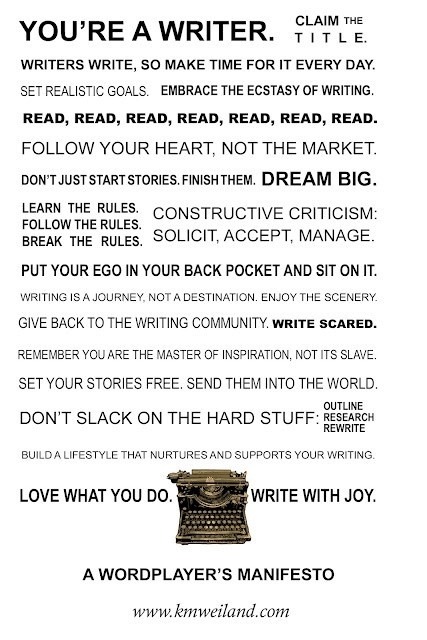
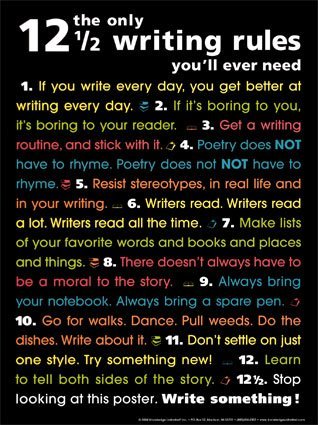
I've amassed a little collection of quotes about writing and books that I thought you might enjoy:


Sunday, June 3, 2012

Letters of Note: John Steinbeck on Writing

Letters of Note has a wonderful letter from John Steinbeck to his creative writing professor at Stanford University. (Bolding mine)


The only way to write a good short story, you said, was to write a good short story. Only after it is written can it be taken apart to see how it was done. It is a most difficult form, you told us, and the proof lies in how very few great short stories there are in the world.

The basic rule you gave us was simple and heartbreaking. A story to be effective had to convey something from writer to reader and the power of its offering was the measure of its excellence. Outside of that, you said, there were no rules. A story could be about anything and could use any means and technique at all—so long as it was effective.


As a subhead to this rule, you maintained that it seemed to be necessary for the writer to know what he wanted to say, in short, what he was talking about. As an exercise we were to try reducing the meat of a story to one sentence, for only then could we know it well enough to enlarge it to three or six or ten thousand words.


[...]

If there is a magic in story writing, and I am convinced that there is, no one has ever been able to reduce it to a recipe that can be passed from one person to another. The formula seems to lie solely in the aching urge of the writer to convey something he feels important to the reader. If the writer has that urge, he may sometimes but by no means always find the way to do it.

It is not so very hard to judge a story after it is written, but after many years, to start a story still scares me to death. I will go so far as to say that the writer who is not scared is happily unaware of the remote and tantalizing majesty of the medium.